
VocalPoint Logo

Project Description

Students with hearing disabilities struggle to engage fully in class lectures and group discussions. VocalPoint is a portable table-top device that connects wirelessly to users’ hearing aids to amplify speakers of interest and reduce noise in loud indoor settings. Current technologies are expensive and not compatible with all hearing aids on the market. VocalPoint aims to bridge barriers to education using microphone array processing, voice detection, and localization in a user-friendly package.

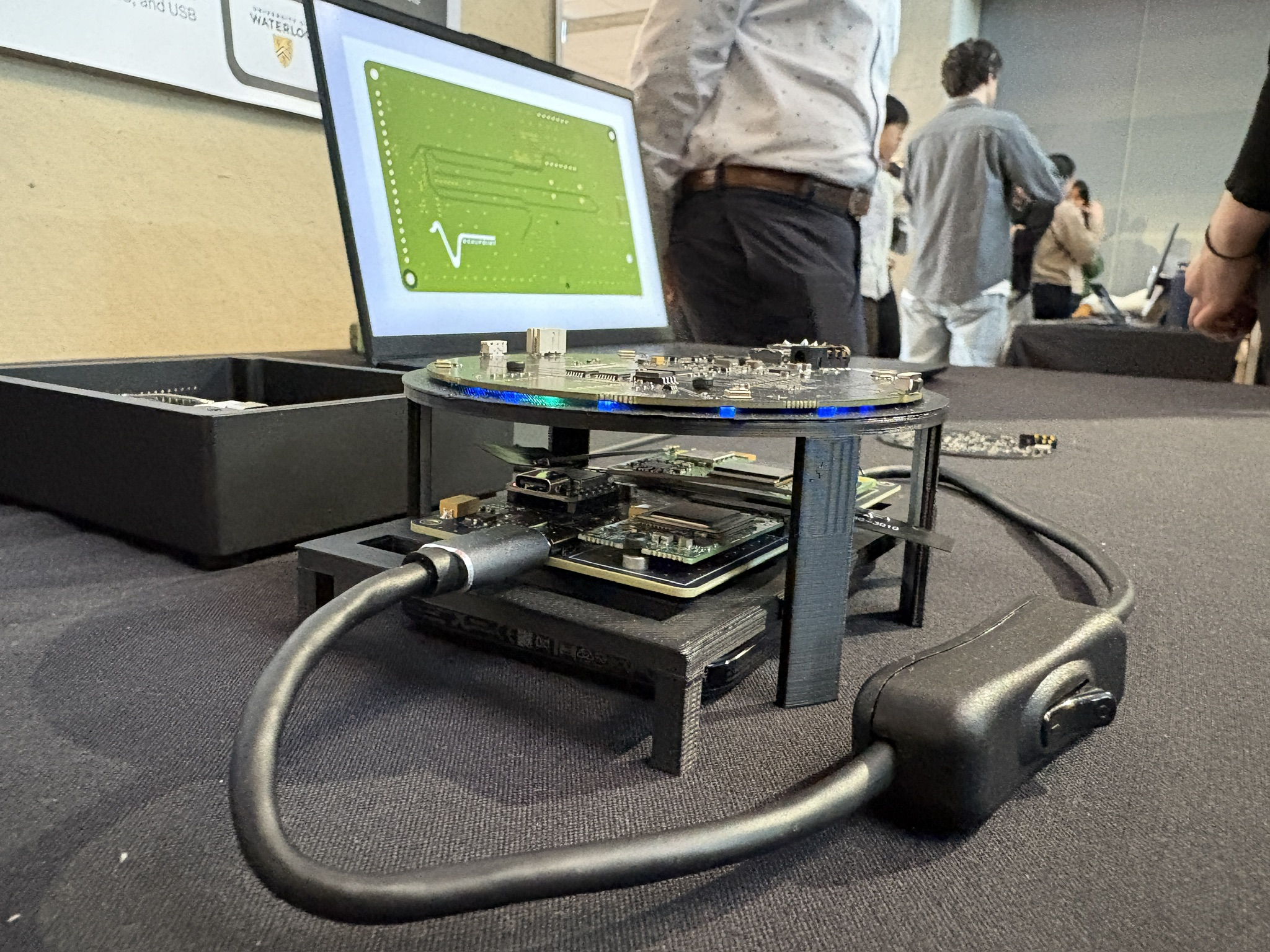
Picture of VocalPoint's Prototype

Qualification for Specializations & Options

This project fulfills the capstone requirements of the Medical Devices and Medical AI Specializations.

Funding, Awards, & Distinctions

Yuen Family Foundation Award for Healthy Aging: Awarded $10,000 for our project’s potential to improve the quality of life for older adults with hearing impairment.
Centre for Aging and Brain Health Innovation (CABHI) Program: Awarded $2,000 for a project that addresses challenges faced by older adults.

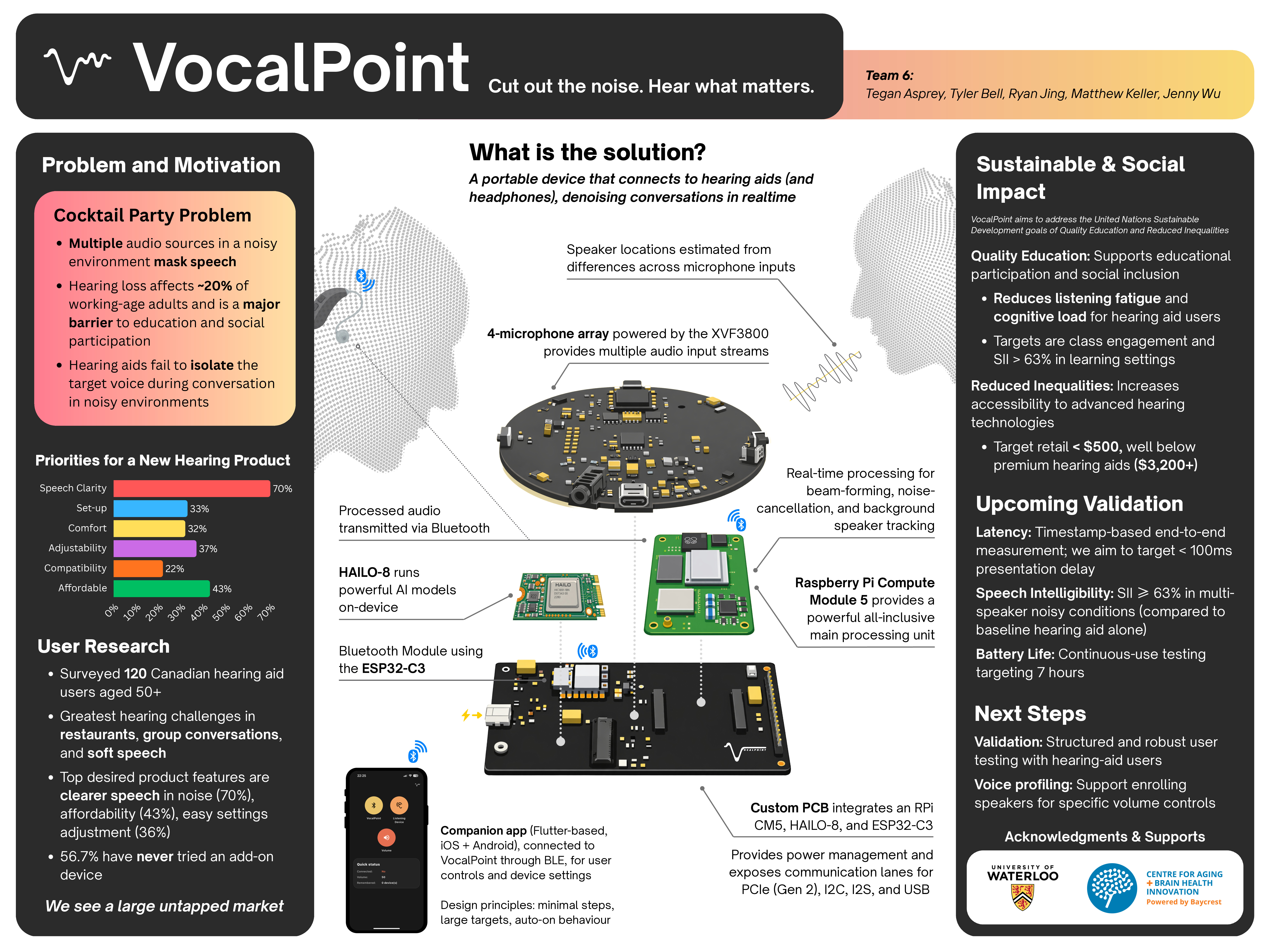
Symposium Poster

Picture of VocalPoint's Capstone Symposium Poster

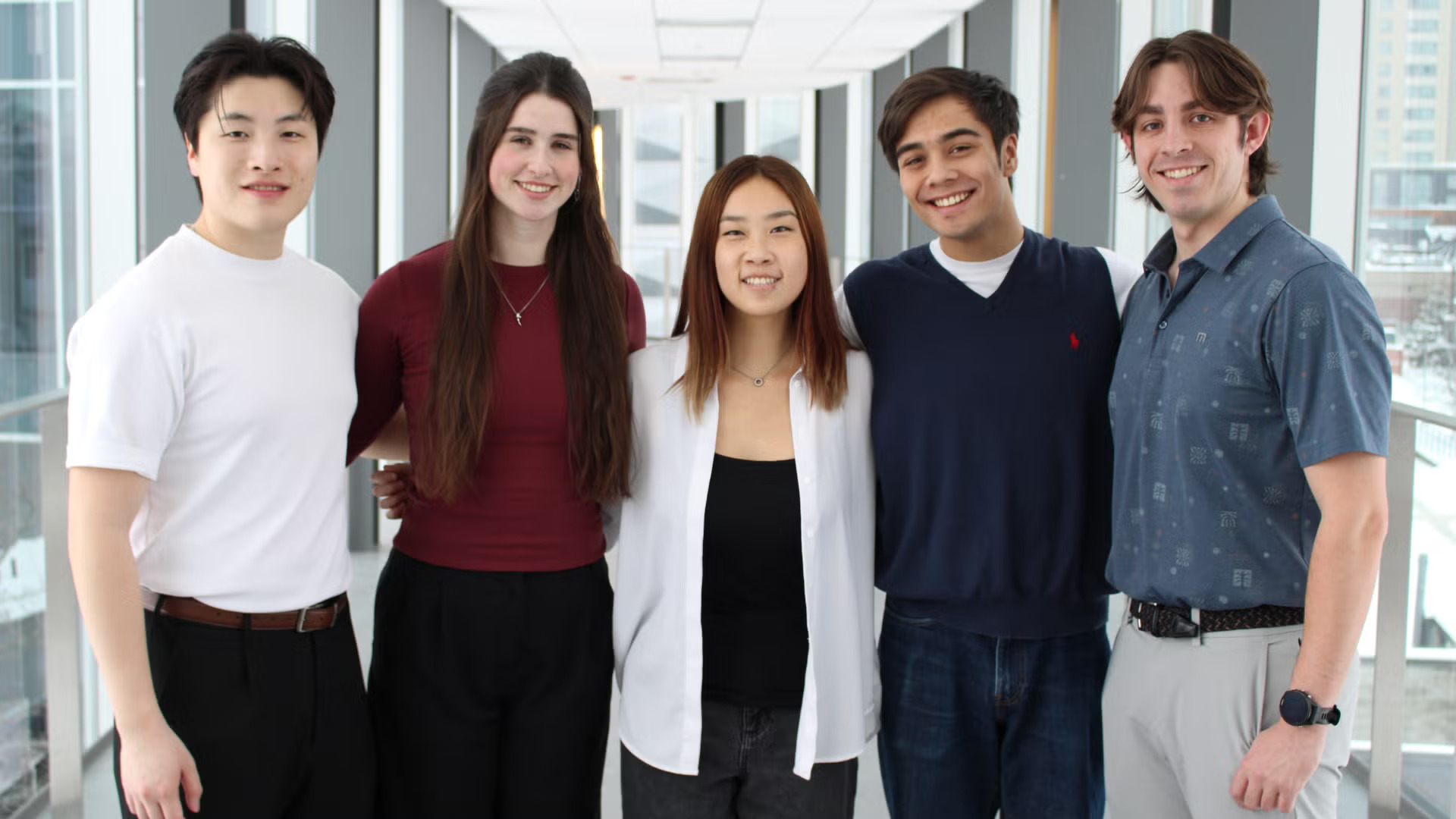
Meet the VocalPoint Team!


A picture of VocalPoint

Ryan Jing, Tegan Asprey, Jenny Wu, Matthew Keller, Tyler Bell

Advisor: Ewen MacDonald


Overall Capstone Experience

Capstone Described in 3 Words:

Challenging, Innovative, Collaborative

Favourite Capstone Memory

Working together as a team to fully realize our solution. Every member of our team has their distinct role and strengths, and when we work together to brainstorm, develop, and execute our plan, we have fun doing it together.

Biggest Challenges

  1. Finding an idea that satisfied the problem space we wanted to enter, with the right scope for a project spanning over 3 academic terms.
  2. Acquiring funding for many of the tools and components needed for our project
  3. Integrating all the different subsystems of our complex solution into one working device

Takeaways

It was difficult approaching an entirely new problem space, with an entirely new timeline, integrating requirements and checkpoints, while being able to gauge whether or not the team could execute our idea within the capstone timeline. It was critical that we worked as hard as we could as a team together to plan our project, fully understand each sub-component, set milestones and goals for ourselves, and allow each member to take charge of their individual roles and their respective projects. Only by relying on each of our unique skills, we were able to complete and cover all aspects of this project.

Advice for Future BME Students

Capstone is an opportunity to experience how rapid prototyping and R&D is performed in a biomedical space, applying all design and validation skills you will learn over the years in the BME program. It is not a time to solve all the world's problems in a singe project. Make sure to choose a problem space you are passionate about, and focus on a unique and concentrated problem that you feel you can make an impact in.


What's Next?

We believe our project will truly make an impact in the lives of hearing aid users, but the implementation within this capstone timeline is not what we'd imagine a market product would look like. If we were to continue this project, it would requires years and millions in funding, creating a truly low-energy higher efficiency device, that is easy for hearing aid users to integrate into their lives.


Contact Information

Feel free to reach out to Ryan Jing (r5jing@uwaterloo.ca), Tegan Asprey (tasprey@uwaterloo.ca), Jenny Wu (j622wu@uwaterloo.ca), Matthew Keller (m6keller@uwaterloo.ca), or Tyler Bell (t6bell@uwaterloo.ca) with any questions.